
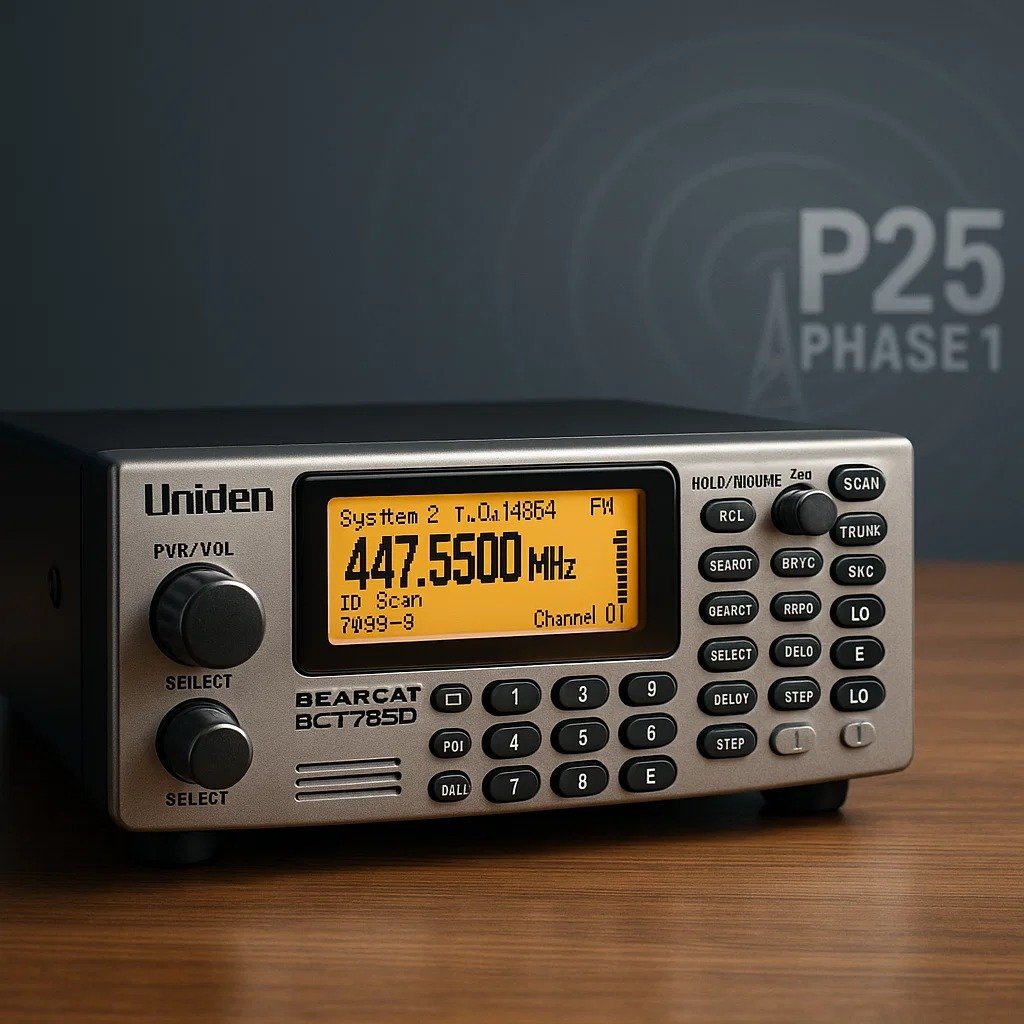
The Bearcat BCS785D is a digital scanner that has gained significant popularity among hobbyists, professionals, and communication enthusiasts. Many users wonder whether this scanner supports Phase 1 or Phase 2, and understanding this is essential for optimal usage. Knowing the phase compatibility affects which communications you can monitor and ensures you make an informed purchase. The BCS785D is celebrated for its reliability and performance, making it a preferred choice in the market for anyone interested in scanning public safety and emergency channels.
What Is the Bearcat BCS785D Scanner?
The Bearcat BCS785D is a versatile scanner designed to monitor both analog and digital communications. It is particularly suitable for hobbyists, emergency response professionals, and radio enthusiasts who wish to stay connected to public safety frequencies. Its user-friendly design and broad frequency coverage make it accessible to beginners while offering enough features for experienced users. The primary purpose of the BCS785D is to provide real-time access to communications in a way that is efficient, reliable, and convenient.
Understanding P25 Technology
The BCS785D operates on P25 digital radio systems, widely used by public safety agencies. P25, or Project 25, is a suite of standards designed for secure and reliable digital communications. It includes two distinct phases. Phase 1 uses Frequency Division Multiple Access (FDMA), which allows a single voice channel per frequency and is compatible with most legacy systems. Phase 2 uses Time Division Multiple Access (TDMA), doubling the number of voice transmissions per channel and increasing system efficiency. Understanding these phases is crucial for scanner buyers because it determines the type of communications the device can monitor.
Understanding the Key Differences Between Phase 1 and Phase 2
Phase 1 and Phase 2 differ primarily in their channel allocation and transmission methods. Phase 1 scanners like the BCS785D are suitable for monitoring most public safety and emergency channels, as many systems still operate using Phase 1 standards. Phase 2, on the other hand, offers improved channel efficiency through TDMA, but requires compatible scanners to decode these transmissions. Many users find the terminology confusing, but Phase 1 remains widely used and sufficient for typical monitoring needs. Understanding the distinction helps users make informed decisions when selecting a scanner.
Bearcat BCS785D: Phase 1 or Phase 2 Compatibility
The Bearcat BCS785D is strictly Phase 1 compatible and does not support Phase 2 transmissions. This limitation does not affect most hobbyist or professional users, as Phase 1 coverage remains extensive. The scanner is effective for monitoring analog and digital P25 systems, making it a reliable choice for everyday use. Phase 2 support is only necessary in areas where TDMA systems have become the standard, which is still limited in many regions.
Key Features and Specifications of the BCS785D
The BCS785D is designed with features that enhance its scanning capabilities. It supports a wide range of VHF and UHF frequencies, making it ideal for monitoring police, fire, EMS, and other emergency channels. Its memory capacity allows users to save numerous channels for quick access. The audio clarity is excellent, with adjustable volume and tone controls to ensure clear reception. The LCD display provides essential information, including frequency, channel name, and system status, offering an intuitive and efficient user experience. These specifications make the BCS785D versatile for both home and field use.
Why Phase Compatibility Confuses Users
Phase compatibility can be confusing due to technical jargon, ambiguous marketing, and the evolving nature of P25 technology. Many users mistakenly assume that all modern scanners must support Phase 2, overlooking the fact that Phase 1 remains widely used. Understanding the distinction between the phases clarifies the limitations and capabilities of the BCS785D and helps users set realistic expectations for performance and monitoring options.
Why Phase 1 vs Phase 2 Matters for Buyers
The difference between Phase 1 and Phase 2 compatibility has practical implications for scanner buyers. Choosing the right phase ensures that the scanner meets your monitoring needs and avoids unnecessary investment in a more expensive device with unsupported features. Phase 1 scanners like the BCS785D remain sufficient for most users, offering reliable coverage and excellent performance at a reasonable cost. Understanding your local system’s phase usage can guide you in making the best choice.
Setting Up and Using the Bearcat BCS785D
Setting up the BCS785D is straightforward. Users need to connect the power supply or insert batteries, program the desired frequencies, and adjust the audio and scanning settings. Optimal placement, such as near a window, enhances reception, while regularly updating frequencies ensures continued coverage. The scanner is designed for both stationary and portable use, allowing users to monitor communications wherever necessary. Troubleshooting is simple, with solutions available for weak signals, audio issues, or system resets if needed.
Conclusion
The Bearcat BCS785D is a reliable and user-friendly Phase 1 scanner suitable for hobbyists and professionals alike. While it does not support Phase 2 TDMA transmissions, its capabilities are sufficient for most public safety monitoring needs. Its broad frequency coverage, excellent audio quality, and user-friendly design make it an ideal choice for anyone looking to explore analog and digital scanning. Understanding the difference between Phase 1 and Phase 2 ensures that users select the right scanner for their requirements, making the BCS785D a valuable investment for consistent, reliable performance.
FAQs
Are Bearcat BCS785D scanners suitable for beginners?
The BCS785D is beginner-friendly with an intuitive interface and easy setup, making it accessible to first-time users.
Can the BCS785D scan both analog and digital signals?
Yes, it supports analog transmissions and Phase 1 digital P25 channels, providing wide monitoring coverage.
How do I update firmware for optimal performance?
Firmware updates are available through official Bearcat software, ensuring the scanner operates efficiently.
Are there alternative scanners that support Phase 2?
Yes, scanners like the Uniden BCD996XT and Whistler TRX-1 are designed to monitor Phase 2 systems.
Where can I find official manuals and guides?
Official manuals and setup guides are available on Bearcat or Uniden websites, providing detailed instructions for users.
Read More: Avstarnews Contact Guide: Phone Number, Support & Info