
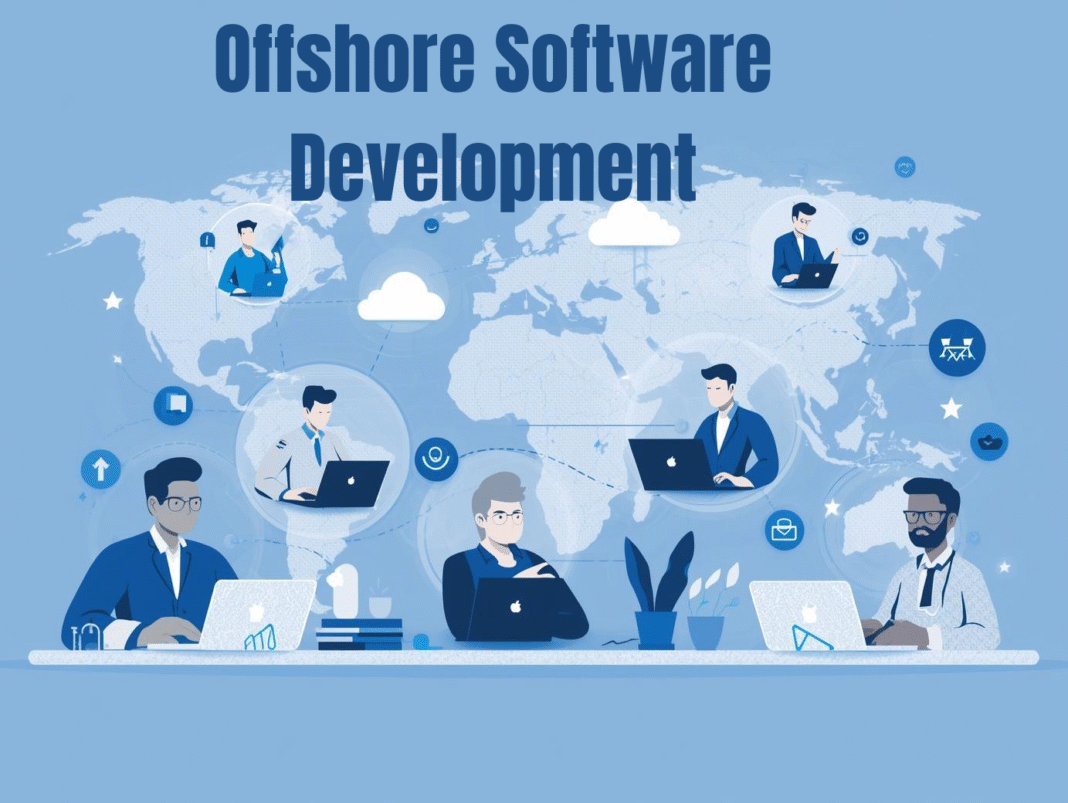
Offshore development gets a bad rap. Horror stories circulate. Miscommunication disasters. Quality nightmares. Projects that spiral out of control.
But done right? It’s a game-changer.
Companies access global talent. Reduce costs significantly. Build around the clock. Scale teams rapidly.
The question isn’t whether offshore works. It’s whether you know how to make it work.
The Brutal Truth About Cost Savings
Yes, offshore development costs less. Sometimes dramatically so.
A senior developer in San Francisco costs $150,000+ annually. In Poland? Maybe $60,000. India? $30,000. That math attracts CFOs.
But here’s what they don’t tell you in the sales pitch: hidden costs exist. Management overhead increases. Communication takes longer. Onboarding requires more effort.
Slack, despite being a tech company, carefully balances their distributed teams. They don’t offshore purely for cost. They offshore for talent access and timezone coverage. The cost savings? A bonus, not the strategy.
Smart companies budget 20-30% more than the sticker price. Account for reality. Not marketing materials.
Picking the Right Location
Not all offshore destinations equal each other.
India offers massive talent pools. Bangalore alone has hundreds of thousands of developers. English proficiency is strong. Timezone overlap with US exists during certain hours. But competition for top talent is fierce. Turnover can be high.
Eastern Europe provides excellent technical skills. Poland, Ukraine, Romania. Cultural alignment with Western Europe and North America tends to be stronger. Timezone overlap is better for European companies. Costs run higher than India but lower than onshore.
Latin America gives US companies timezone alignment. When you’re in New York, your team in Buenos Aires or Mexico City works similar hours. Real-time collaboration becomes easier. English skills vary more than India or Eastern Europe.
Southeast Asia – Vietnam, Philippines – offers growing talent markets. Lower costs. Improving infrastructure. But less mature than India or Eastern Europe.
GitHub has teams distributed globally. They learned that timezone matters more than cost. Asynchronous communication works, but real-time collaboration still matters for complex problems.
The Communication Minefield
This is where most offshore projects explode.
You think you explained the requirement clearly. They think they understood. Six weeks later, you see the result. It’s nothing like you envisioned.
Written communication needs to be ridiculously detailed. What seems obvious to you isn’t obvious to someone in a different culture, different timezone, with different context.
Instead of: “Make the login page user-friendly.”
Write: “The login page should have email and password fields centered on the screen. Add a ‘Remember Me’ checkbox below the password field. The login button should be blue (#0066CC) and disabled until both fields contain text. Display validation errors in red text below the relevant field.”
Painful? Yes. Necessary? Absolutely.
Video calls matter. You can’t build relationships through Slack alone. Regular video calls create connection. Weekly at minimum. Daily standups are even better.
Automattic (WordPress) operates entirely distributed. They invest heavily in annual company meetups. Why? Because face-to-face time, even occasional, strengthens remote relationships dramatically.
Setting Up for Success
Start small. Don’t offshore your entire development team immediately. Begin with a pilot project. Non-critical but real. Learn the challenges with limited risk. For Salesforce work, Salesforce Staff Augmentation is often the safest way to start—add capacity for a defined pilot while keeping architecture, quality gates, and stakeholder communication tightly controlled.
Overlap hours are mandatory. If your team is in California and your offshore team in India, you have maybe three hours of overlap. Use them wisely. Schedule critical discussions then. Don’t waste it on status updates.
Documentation becomes law. Onshore teams get away with tribal knowledge. Offshore teams can’t. Document architecture decisions. Code standards. Business rules. Everything.
Basecamp built their company entirely remote. Their secret? Written communication as the primary mode. Everything documented. Everything searchable. New people ramp up by reading, not asking.
Quality Control That Actually Works
Code reviews are non-negotiable. Every single line of offshore code gets reviewed. Establish standards. Enforce them consistently.
Automated testing is your safety net. Unit tests. Integration tests. End-to-end tests. If it’s not tested, it’s not done.
Continuous Integration catches problems early. Automated builds. Automated deployments to staging. Problems surface quickly rather than festering.
Spotify runs distributed teams globally. Their quality approach? Strong engineering culture. Clear standards. Extensive automation. Teams have autonomy, but within guardrails.
The Management Challenge
Managing offshore teams requires different skills than managing local teams.
Trust but verify. You can’t micromanage across timezones. But you need visibility. Daily standups. Sprint reviews. Clear metrics.
Cultural differences matter. In some cultures, saying “no” directly is rude. They’ll say “yes” even when they don’t understand or disagree. You need to read between lines. Ask clarifying questions. Create psychological safety for pushback.
Turnover requires planning. Offshore markets often have higher turnover. Key person leaves? Your project shouldn’t collapse. Documentation helps. Knowledge sharing helps. Pairing developers helps.
GitLab, fully remote with 1,300+ people globally, publishes their entire company handbook online. Everyone knows how everything works. New hires ramp up faster. Knowledge doesn’t walk out the door when someone leaves.
Legal and IP Considerations
Contracts matter intensely. Who owns the code? What happens if the relationship ends? What are the deliverables and timelines?
Work with lawyers familiar with international contracts. Different countries have different labor laws, IP protections, and enforcement mechanisms.
Data privacy and security need extra attention. GDPR. HIPAA. CCPA. Various regulations apply. Your offshore team needs to comply. Audit their security practices. Don’t just trust promises.
Hybrid Models That Work
Pure offshore rarely works optimally. Hybrid models often win.
Keep core architects and product managers onshore. They set direction. Make key decisions. Then offshore team executes under their guidance.
Or keep frontend onshore, closer to users and designers. Offshore backend work, which is more specification-driven.
Spotify uses “squads” – small, cross-functional teams. Some squads are entirely remote. Some are co-located. Some are hybrid. They let teams choose what works best for their context.
When Offshore Doesn’t Make Sense
Extremely fluid requirements. If you’re still figuring out what to build, onshore works better. Rapid iteration requires rapid communication.
Highly sensitive projects. If security or IP concerns are paramount, keeping development onshore might be worth the cost.
Small, short projects. The overhead of setting up offshore might exceed the savings for three-month projects.
Making It Work Long-Term
The companies that succeed with offshore think long-term. They build relationships, not just hire contractors.
Invest in your offshore team. Training. Career development. Include them in company culture. Fly them to headquarters occasionally. Treat them as real team members, not just resources.
Buffer, fully remote company, focuses on building genuine team culture. They invest in retreats. Regular video hangouts. They know that distributed teams need intentional culture building.
The Reality Check
Offshore development isn’t magic. It’s not automatic cost savings. It’s not instant scaling.
It’s hard work. It requires planning. Strong processes. Excellent communication. Active management.
But do it right? You access world-class talent. You build sustainable cost structures. You create teams that deliver real value.
The question is: are you willing to invest what it takes to make it work?